
Last updated November 15, 2026
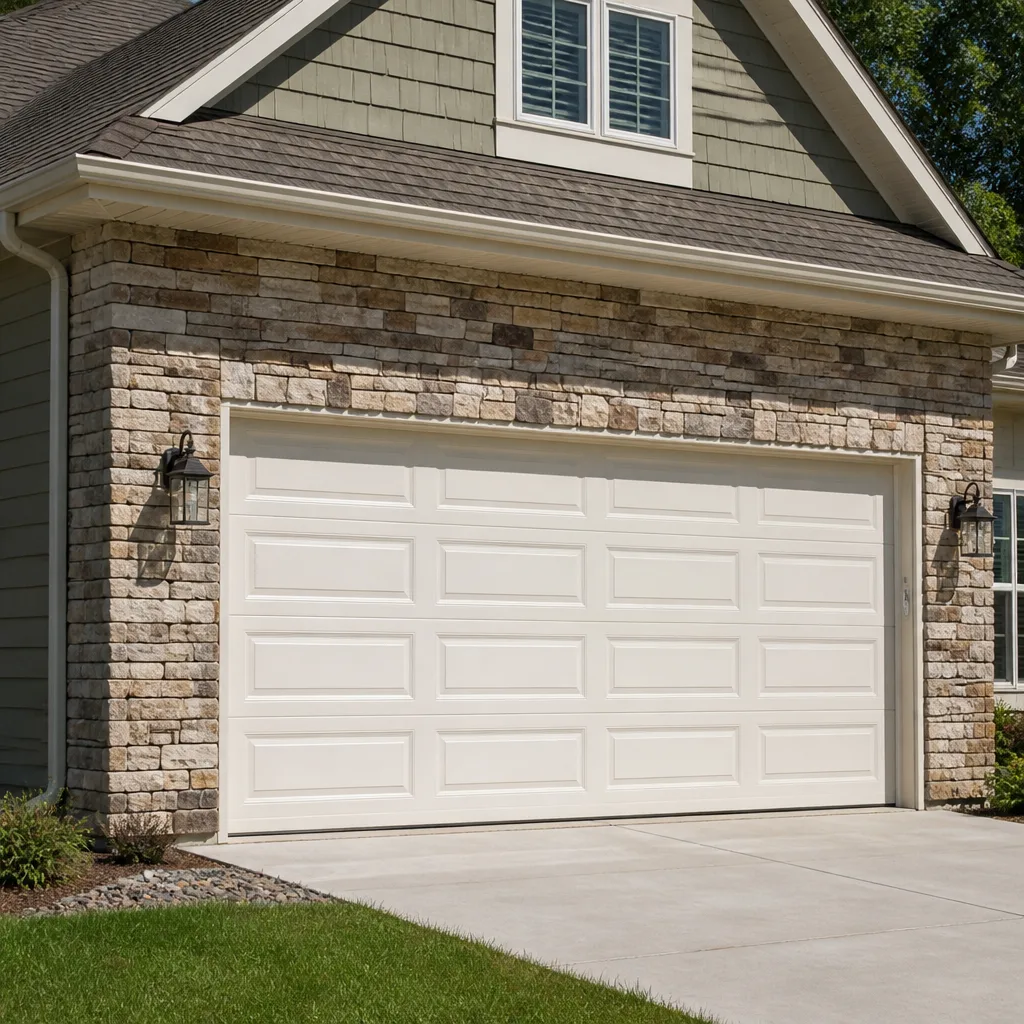 Raised-panel steel
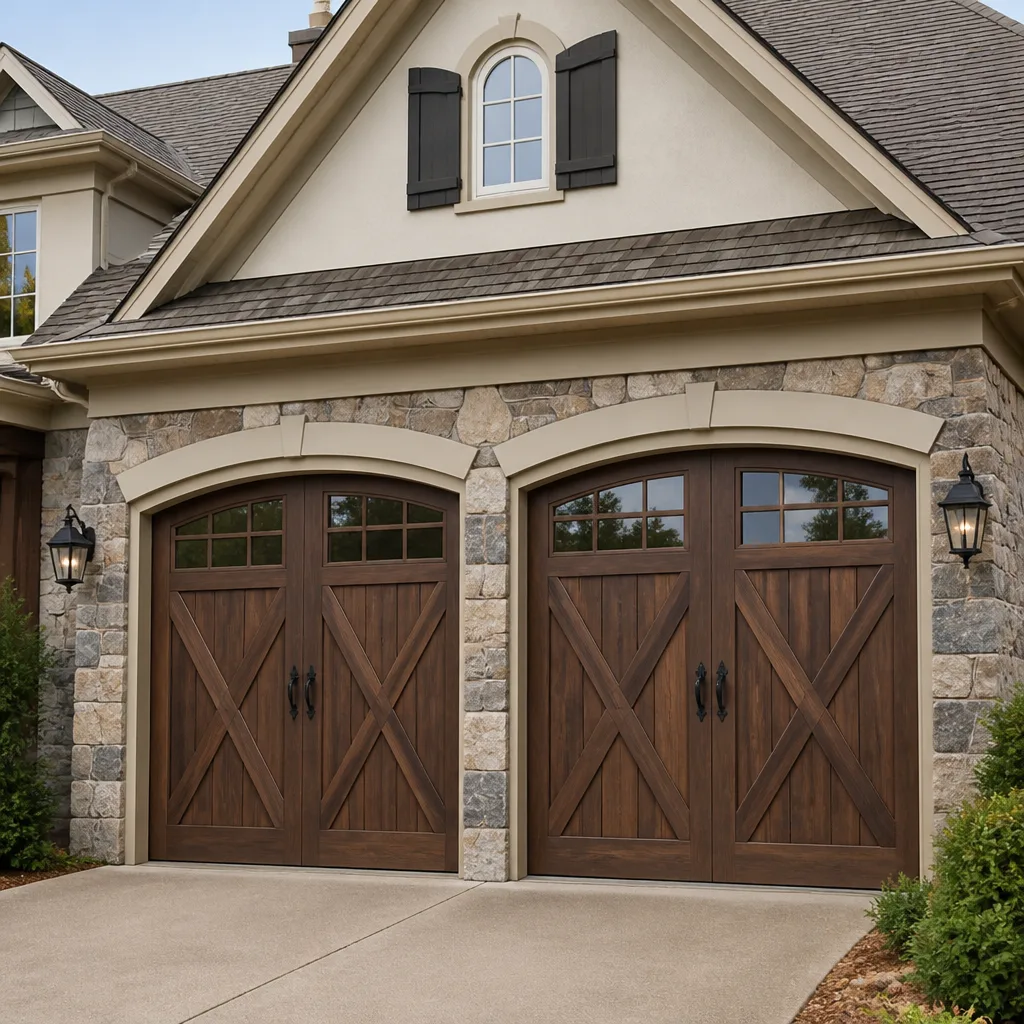 Carriage house
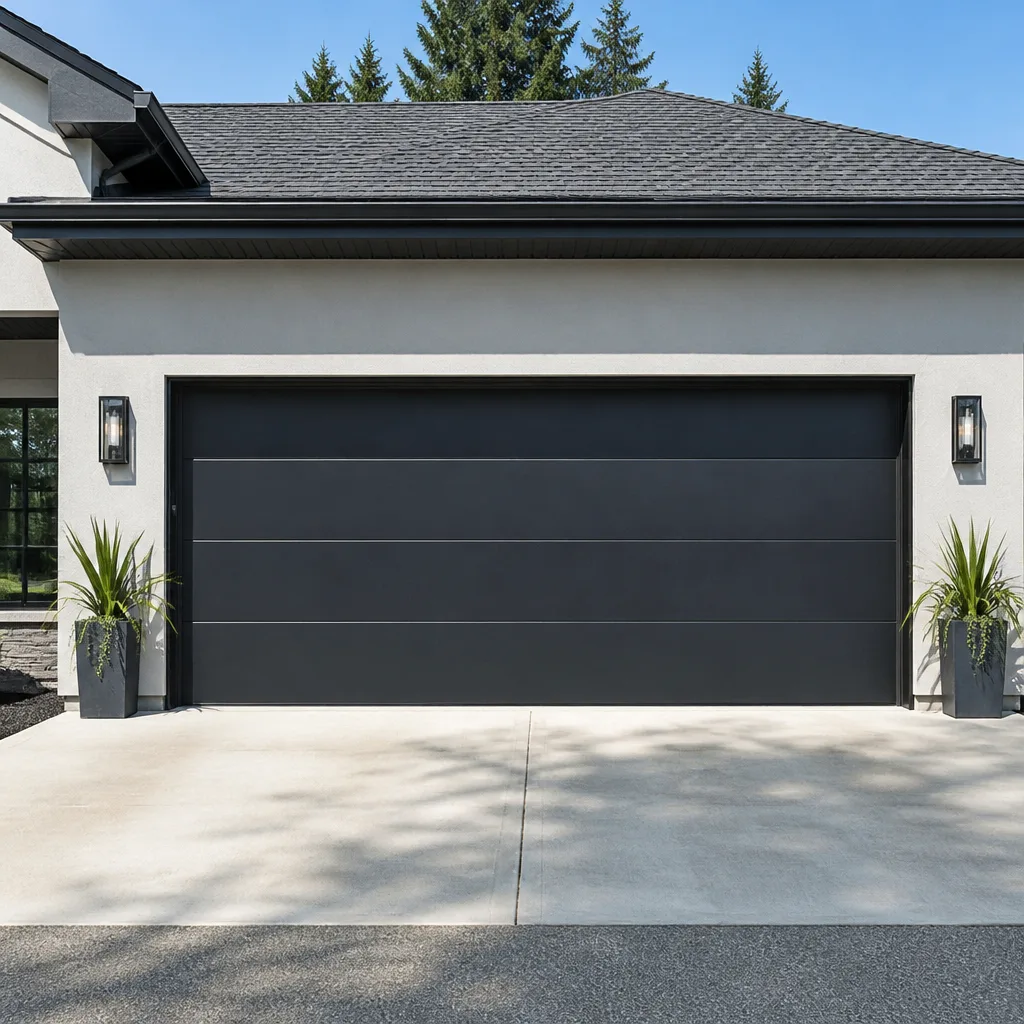 Modern flush
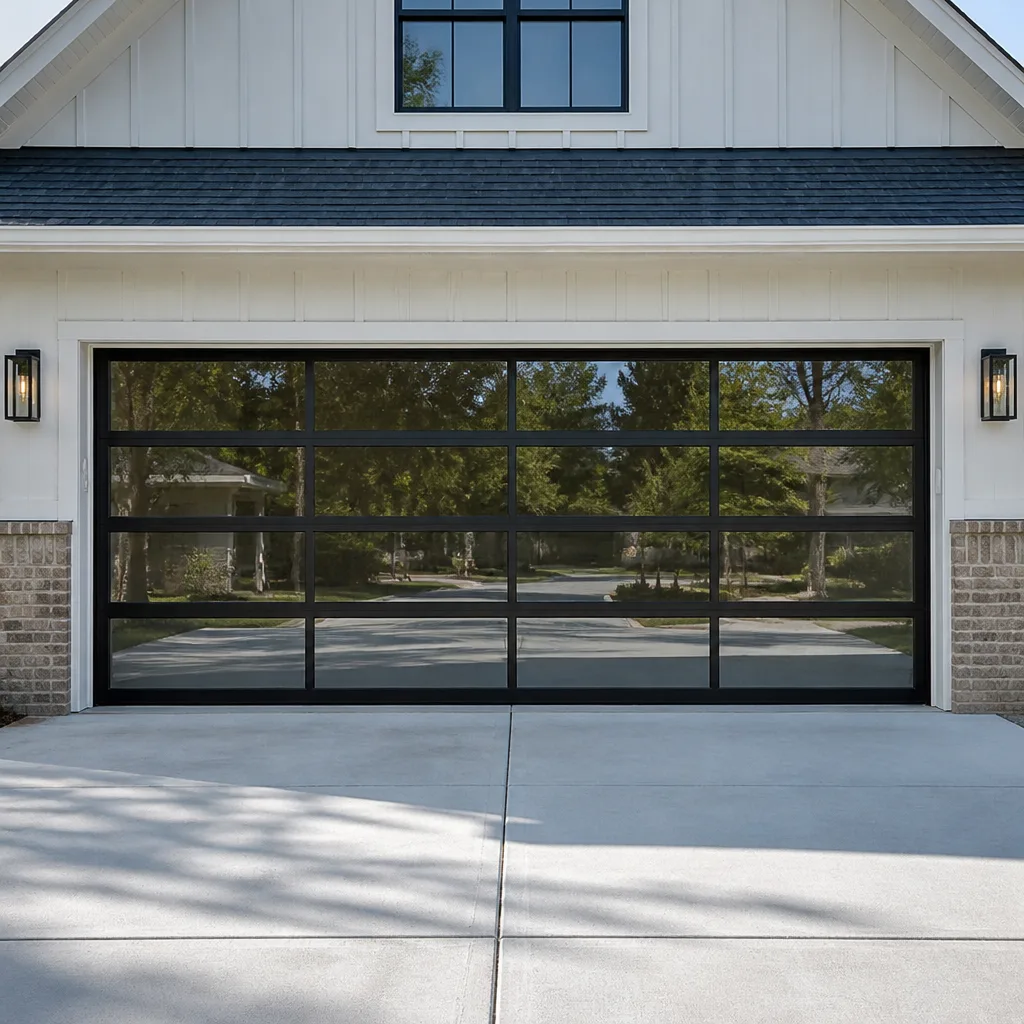 Full-view glass
 LiftMaster openers
 Chamberlain openers
Full 25-point door and opener safety check with every visit - springs, cables, rollers, tracks, and your LiftMaster or Chamberlain opener included
You get a price before we start. It does not change when the pro arrives.
Get your free estimateGarage Door Repair Troubleshooting in Hillsboro: Common Problems and How to Fix Them
The door that “just stopped working” overnight almost never failed overnight. The actual failure point has usually been compounding for weeks – a torsion spring winding down under tension, a hinge drying out behind a coat of paint, a bottom seal quietly rotting in the rain – and the symptom you see on Monday morning is rarely the component that broke first. That matters, because chasing the wrong part is how small repairs turn into big ones. In this guide, we map the five mechanical categories every residential garage door failure falls into, tell you which symptoms point to which system, flag the repairs that are genuinely safe to handle yourself, and explain how Hillsboro’s wet winters wear specific parts faster than homeowners expect.
Quick Answer
Most garage door problems in Hillsboro come down to one of five systems: the springs, the cables, the opener and its sensors, the rollers and hinges, or the door and its seals. If the door won’t move at all, suspect the springs or the opener. If it moves unevenly or reverses unexpectedly, suspect the safety sensors, the tracks, or a cable. Springs and cables are never a DIY repair – they hold dangerous tension and require a trained technician. Sensors, remotes, and hinge lubrication are safe to check yourself. A free estimate costs you nothing and tells you exactly which category you’re in.
Styles & brands we work with
- Raised-panel steel
- Carriage house
- Modern flush
- Full-view glass
- LiftMaster openers
- Chamberlain openers
Table of Contents
- How to Diagnose a Garage Door Problem by Symptom
- Reading Noise: Grinding, Squealing, and Popping
- Door Won’t Move at All vs. Moves Unevenly vs. Reverses Unexpectedly
- What’s Safe to Fix Yourself and What Isn’t
- How Hillsboro’s Wet Winters Accelerate Specific Failures
- Why Forcing a Stiff Door or Bypassing the Sensor Backfires
- Typical Repair Costs in Hillsboro
- When to Call a Technician
How to Diagnose a Garage Door Problem by Symptom
Start with the symptom, not the part. The same sound can come from three different components, and the same “won’t open” complaint can mean a dead opener, a snapped spring, or a door jammed in its track. Working backward from what you see and hear narrows it down fast. Here’s the diagnostic path we walk through on the phone before a technician ever loads a van:
Step 1 – Watch the door move. Does it move at all? Does it move a few inches and stop? Does it move but hang or drag on one side? Each answer points to a different category.
Step 2 – Listen. Is the opener motor running with no door movement (opener or spring issue), or is there a grind or squeal as the door travels (roller, hinge, or track issue)?
Step 3 – Check the sensors. Look at the two small units at the bottom of the tracks. A solid light on each usually means they’re working. A blinking or dead light points to a sensor or wire problem before anything else.
Step 4 – Look at the springs. With the door closed and the opener disconnected, look above the door at the torsion spring (mounted horizontally on a shaft) or the extension springs (running along the sides). A visible gap in a torsion spring means it’s broken. Do not touch it.
Step 5 – Pull the manual release only if the door is closed. If the door is open and you pull the release, the door can drop. Only use the release to test the door’s balance when the door is fully down.
Once you’ve narrowed the category, the sections below tell you whether it’s a phone call, a technician, or a five-minute fix. Our Blackwell Garage Door Repair team talks homeowners through this walk-through routinely, and it saves a lot of wrong-part guessing.
Reading Noise: Grinding, Squealing, and Popping
Noise is the most underrated diagnostic tool a homeowner has. Different sounds come from different components, and “lubricate everything” is lazy advice that masks the real problem. Here’s how each sound usually maps out:
- Grinding or scraping usually means metal-on-metal contact: worn rollers with flat spots, a bent or misaligned track, or a torsion bar rubbing where it shouldn’t. On a steel door, it can also mean a panel has warped enough to rub against the frame.
- Squealing or high-pitched squeak is friction, most often dry hinges, dry rollers, or a dry torsion bar. A little white lithium grease in the right places often silences it – the trick is the right places, not the whole door.
- Popping or a loud bang is the sound of a torsion spring breaking. It’s a shock, not a slow creep. If you hear a pop and the door won’t lift, stop trying and call.
- Rattling often means loose hinge bolts, a loose opener chain or belt, or loose track bolts. Usually a tightening job, not a replacement job.
- Clicking from the opener unit without a full cycle usually points to a gear or logic board problem inside the opener itself. That’s an opener-repair call, not a door-repair call, and it’s worth knowing the difference before you call anyone.
In our experience at Blackwell, the popping sound is the one homeowners most often misdiagnose. They hear a bang, assume the opener broke, and call a garage door opener technician. The opener is fine. The spring let go, and the door is now unweighted. That’s a door-repair call, and it’s a good example of why the symptom-to-cause path matters – it’s the difference between someone showing up with the right part and someone showing up with a guess. If you want the dedicated opener side covered, see our garage door opener repair page.
Door Won’t Move at All vs. Moves Unevenly vs. Reverses Unexpectedly
Three very different failures get lumped under “the door is broken.” Treating them as one problem is what sends homeowners down the wrong repair path – and it’s where a lot of unnecessary money gets spent. Split them out and each one points to a completely different system.
The door won’t move at all
If the motor runs but the door stays put, the disconnect is usually mechanical: a broken torsion spring, a snapped cable, or a door that’s come off its track on one side. If the motor is silent, the problem is often electrical: a tripped breaker, a dead safety sensor, a failing logic board, or a burned-out motor capacitor. The fastest way to separate these is to listen for the motor. A quiet opener is an opener problem. A running opener with a stationary door is a mechanics problem.
The door moves unevenly
A door that lifts crooked, hangs on one side, or shudders as it travels is telling you the load isn’t balanced. That’s usually one of four things: a stretched or broken extension spring, a loose or slipped cable drum, a worn roller binding in the track, or a track that’s been knocked out of plumb. That last one happens to a lot of Hillsboro doors after a windstorm drops something against a track – a leaning ladder, a fallen branch, a tipped wheelbarrow. The door doesn’t stop working, it just starts acting wrong, which is why so many homeowners ignore it for weeks.
The door reverses unexpectedly
A door that starts down and goes back up within a few inches is usually doing exactly what it’s designed to do: reacting to a safety sensor. Check whether the sensors are lined up, clean, and unobstructed. If the sensors look fine but the door still reverses, the opener’s force settings or limit switches may have drifted, or the tracks may be binding enough that the opener reads the resistance as an obstruction. The auto-reverse is a safety feature, not a fault – and it is the one thing on a garage door you never want to bypass.
What’s Safe to Fix Yourself and What Isn’t
Some garage door problems genuinely don’t need a technician. Others can put you in the emergency room, and no video makes them safe. Here’s the honest split, in the same terms we’d give a friend.
Safe to handle yourself:
- Aligning or cleaning safety sensors
- Reprogramming a remote or keypad
- Replacing the remote battery
- Lubricating hinges, rollers, and the torsion bar with the right grease
- Tightening loose hinge and track bolts
- Replacing a bottom seal or weatherstripping (with the door fully closed)
Not safe to handle yourself:
- Torsion spring replacement or adjustment
- Extension spring replacement
- Cable replacement or re-spooling
- Track straightening on a loaded door
- Any repair where the door is currently off its track
- Electrical work inside the opener or at the wall outlet
The line here isn’t about skill. It’s about stored tension. A torsion spring on a standard residential door can hold a load that will injure or kill someone who releases it wrong, and cables carry the same tension in a different direction. We tell homeowners plainly: if the repair involves a spring, a cable, or a loaded track, call a trained technician. Everything else on the safe list is fine to try on your own, and if it doesn’t resolve the problem, our garage door repair service covers the rest. Our technicians have up to 9 years of experience with the specific systems installed across Hillsboro homes.
How Hillsboro’s Wet Winters Accelerate Specific Failures
Hillsboro’s wet, mild winters are gentle on people and hard on garage door hardware. If you’ve moved here from a drier climate, the failure pattern you see on your door will look familiar but the timing won’t – things wear faster than you expect on specific components. Here’s what our technicians notice most often around Hillsboro in the wet months:
- Bottom seal rot. The rubber seal at the bottom of the door sits on wet concrete for weeks at a time. It cracks, hardens, and eventually tears away from the aluminum retainer. Once it’s gone, water gets under the door, and the concrete apron and interior floor stay damp. Replacing a bottom seal is cheap; repairing a water-damaged door panel isn’t.
- Rust on torsion bar hardware. The bearing plates, cable drums, and lag screws at each end of the torsion bar sit against the header, where damp air settles. Surface rust on the springs themselves is normal, but rust that’s pitted the bearing plate or seized the drum is a replacement trigger.
- Wood door swelling. Wood sectional doors absorb moisture at the panel joints during a wet spring. The panels swell, the door gets heavier and starts to bind in the tracks. If you have a wood door, expect it to feel tighter in winter than in summer – and if it stops closing cleanly, don’t force it.
- Track misalignment from ground movement. Hillsboro’s clay-heavy soil moves seasonally. When the ground shifts under a slab, the brackets holding the track can move with it, and the door starts dragging. This is a slow failure most homeowners notice only after it’s caused a month of extra strain on the opener.
- Sensor moisture. A wet sensor lens or a wire wicking moisture reads as an obstruction to the opener. A door that reverses only after rain is almost always a sensor-weather problem, not an opener failure.
None of this means a Hillsboro door is doomed. It means the wet season is the right time to walk out and look, not wait until spring. If you catch a bottom seal early, you spend a lot less than you would after the panel starts to rot.
Why Forcing a Stiff Door or Bypassing the Sensor Backfires
The two “quick fixes” we see most often, and the two we push back on hardest, are forcing a stiff door and disabling the auto-reverse sensor. Both work for a day and cost more by the end of the month.
Forcing a stiff door
A door that’s started to bind in its tracks is telling you one of three things: a roller’s worn flat, a track has been knocked out of alignment, or the torsion spring has weakened and the opener is dragging the door up by force. Yanking on the door to “help it” doesn’t fix any of that. It transfers the load from the opener to the panels and hinges, which weren’t designed to carry it. The usual result is a cracked panel, a bent track, a stripped opener gear, or a snapped cable. What was a $200-300 repair turns into a panel or full-door replacement. If the door is binding, don’t force it. Call, describe the sound, and let someone with the right tools diagnose it.
Bypassing the auto-reverse sensor
The photo-eye sensor and the opener’s force-limit settings exist because a closing garage door can kill a small child or pet. Bypassing them, tying them up out of the way, or cranking the force setting up to compensate for a binding door defeats the entire safety mechanism. It’s also the single most common cause of a runaway door that closes on a car, a bike, or a person. It’s a dangerous shortcut, and it needs to be said plainly: don’t do it. If the sensor is giving you trouble, fix the sensor. If the opener is straining, fix the cause of the strain. If the door is shutting on something and you can’t figure out why, call us and we’ll come look.
Typical Repair Costs in Hillsboro
Garage door repair pricing depends on the part, the door type, and how much secondary damage the failing component has caused. The ranges below are typical estimates for the Hillsboro market and are meant to help you budget – the written estimate after a technician inspects the door sets the final price. That price is quoted and agreed before any work starts, so you’ll never see an invoice that surprises you.
| Repair | Typical estimate |
|---|---|
| Safety sensor alignment or replacement | $90-$180 |
| Bottom seal replacement | $120-$220 |
| Roller and hinge replacement (per set) | $140-$260 |
| Torsion spring replacement (one spring) | $180-$340 |
| Extension spring replacement (pair) | $160-$320 |
| Cable replacement (per side) | $180-$320 |
| Track realignment | $150-$280 |
| Opener repair (board, gear, or capacitor) | $180-$380 |
| Full opener replacement (unit only, installed) | $450-$900 |
A matched spring pair is almost always replaced together because springs wear at the same rate – if one has failed, the other is close behind. That means a pair costs roughly twice the per-spring figure above. If you’re weighing repair versus a new door, our team is happy to talk through the numbers on the phone before anyone comes out. Estimates are free, and the call is straightforward. We answer 24/7. Fast dispatch from 7am to 7pm, Sunday through Friday.
When to Call a Technician
You should call a technician when: the door won’t move and you’ve already checked the opener and the breaker; you’ve heard a popping sound and the door won’t lift; the door has come off its track; you see a gap in a torsion spring or a frayed cable; the door reverses on its own with nothing in the way; or you’ve tried a safe DIY fix and the problem hasn’t changed. In any of those cases, describe what you see and hear when you call, and a technician can usually tell you what you’re dealing with before anyone arrives. Our technicians have up to 9 years of experience across Amarr, Wayne Dalton, Craftsman, Raynor, and the other major brands, and garage doors are all we do – nobody on our team is squeezing a door repair between HVAC calls. Blackwell Garage Door Repair offers free estimates in Hillsboro – call (888) 534-4142. We answer 24/7. Fast dispatch from 7am to 7pm, Sunday through Friday. A call outside dispatch hours is booked into the next opening, Sunday through Friday, 7am to 7pm.
See the difference
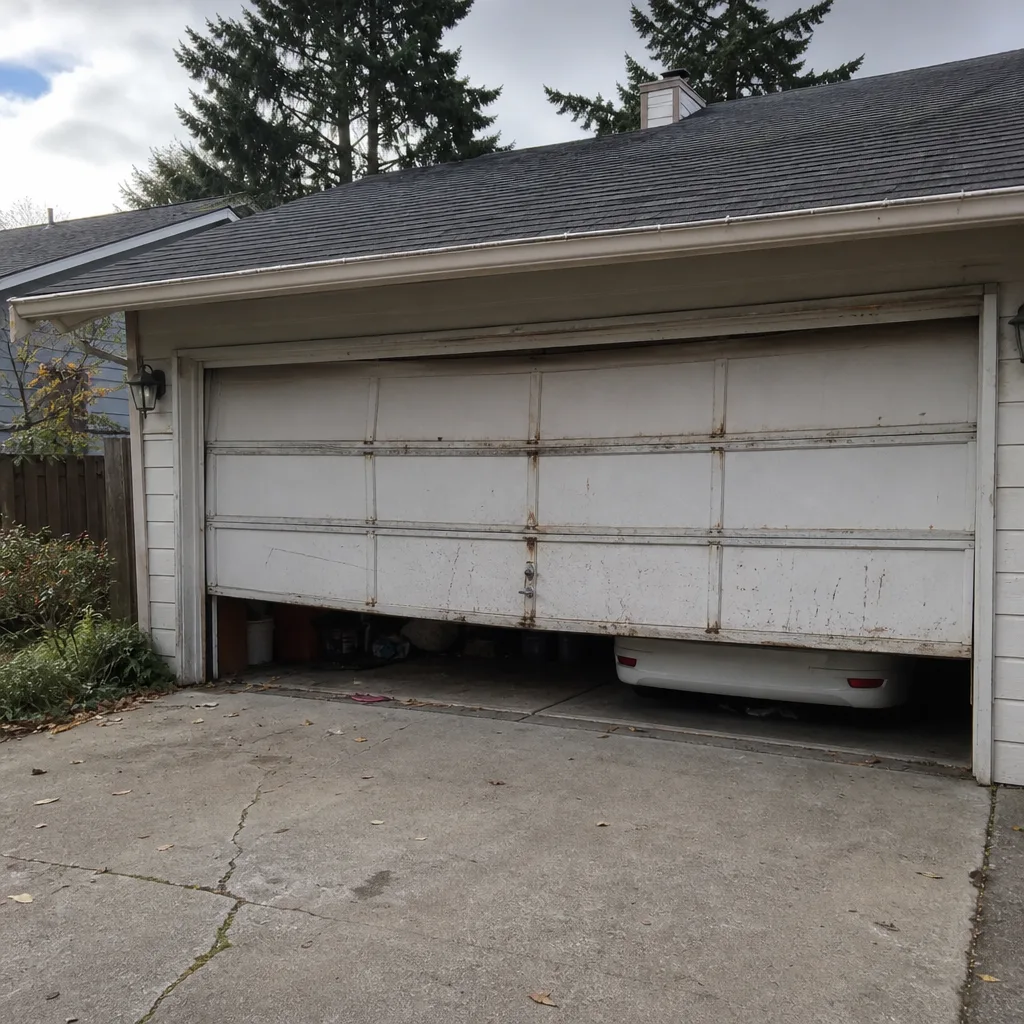 Before
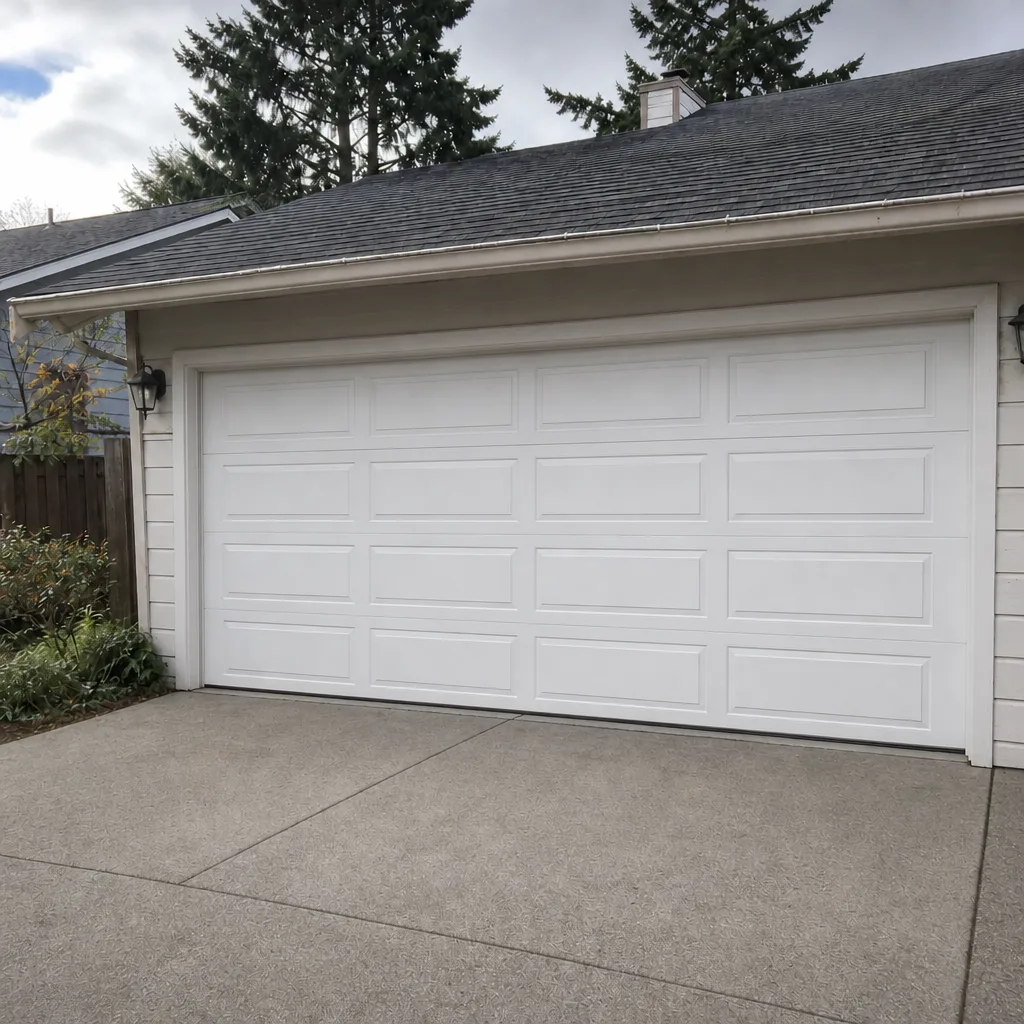 After
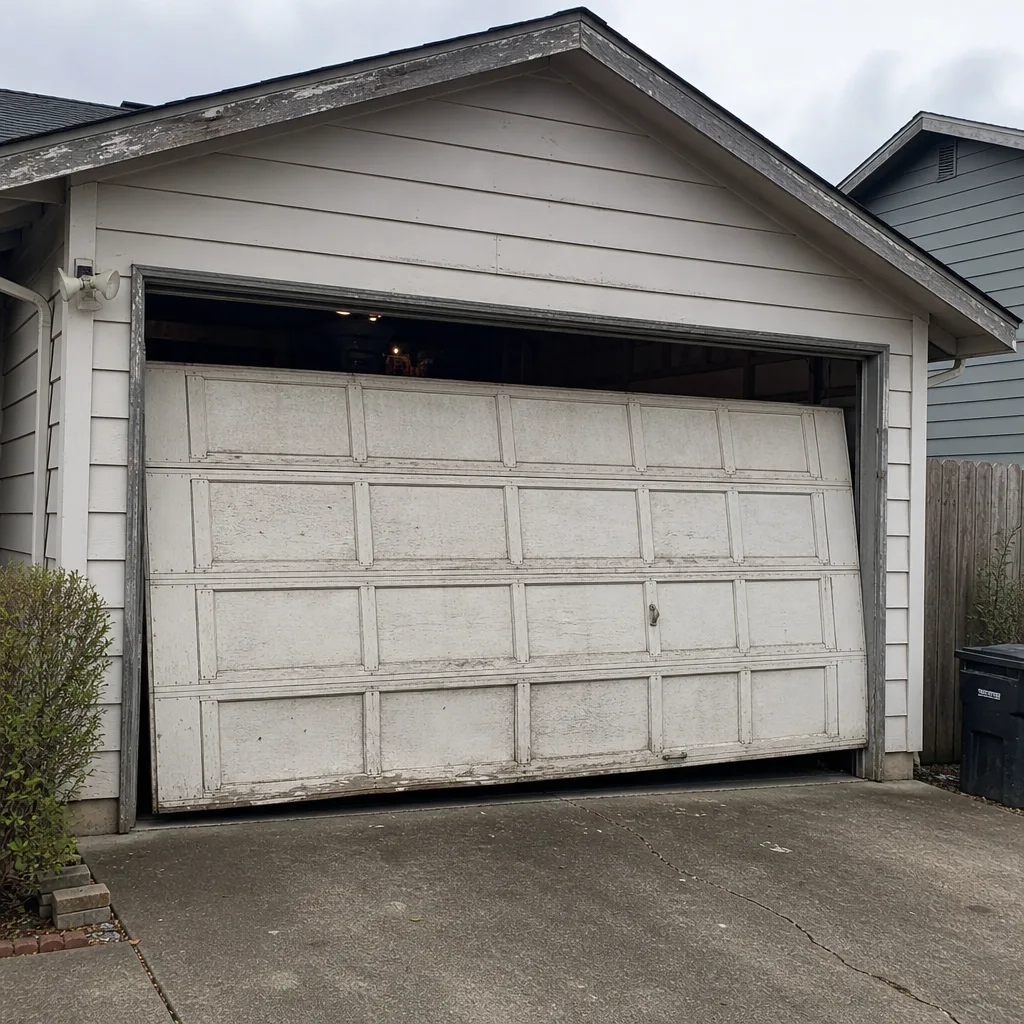 Before
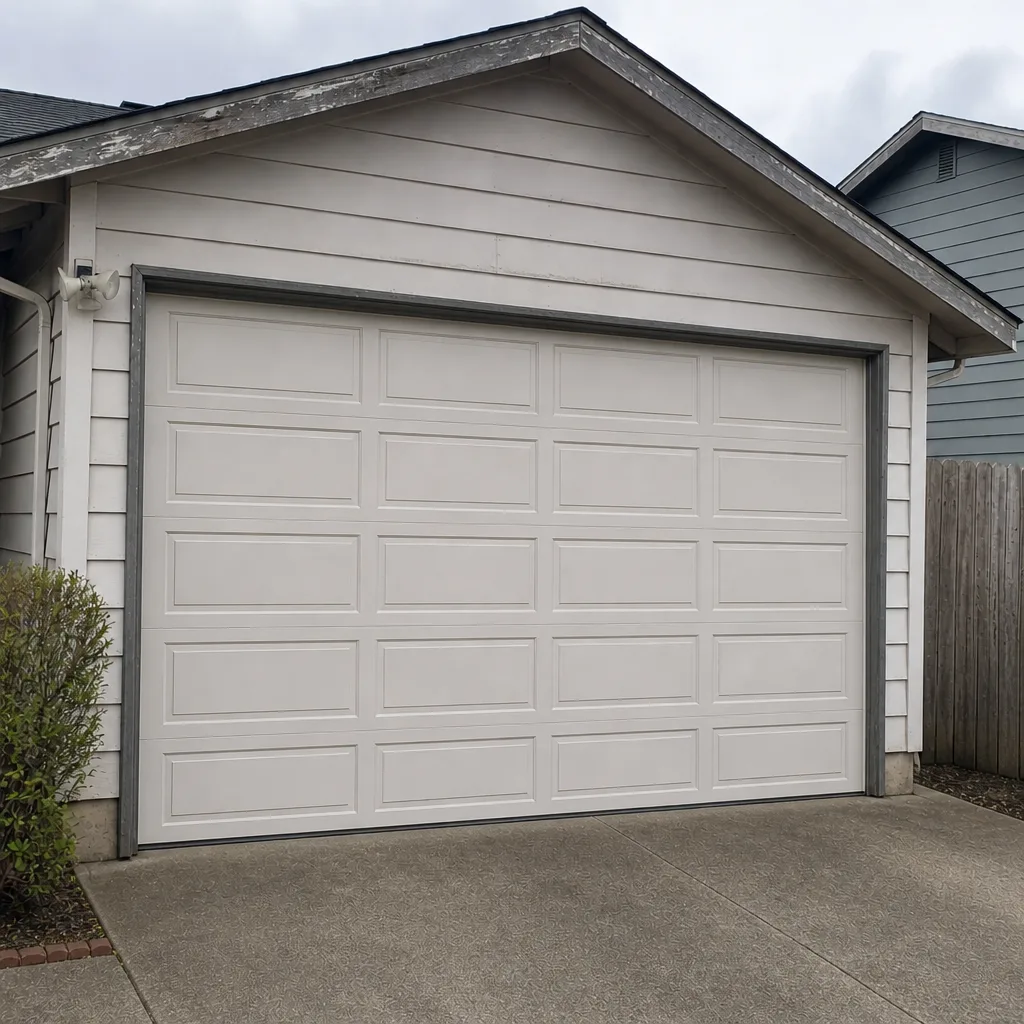 After
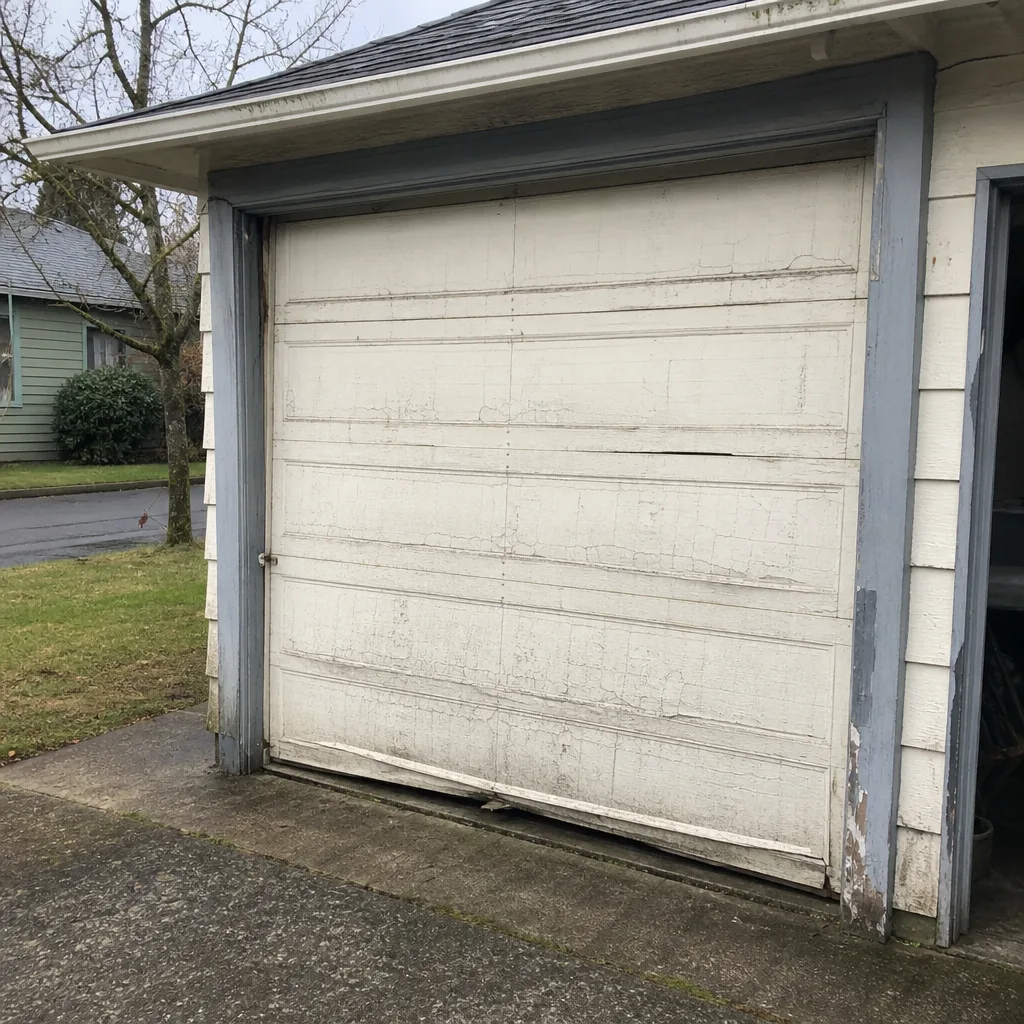 Before
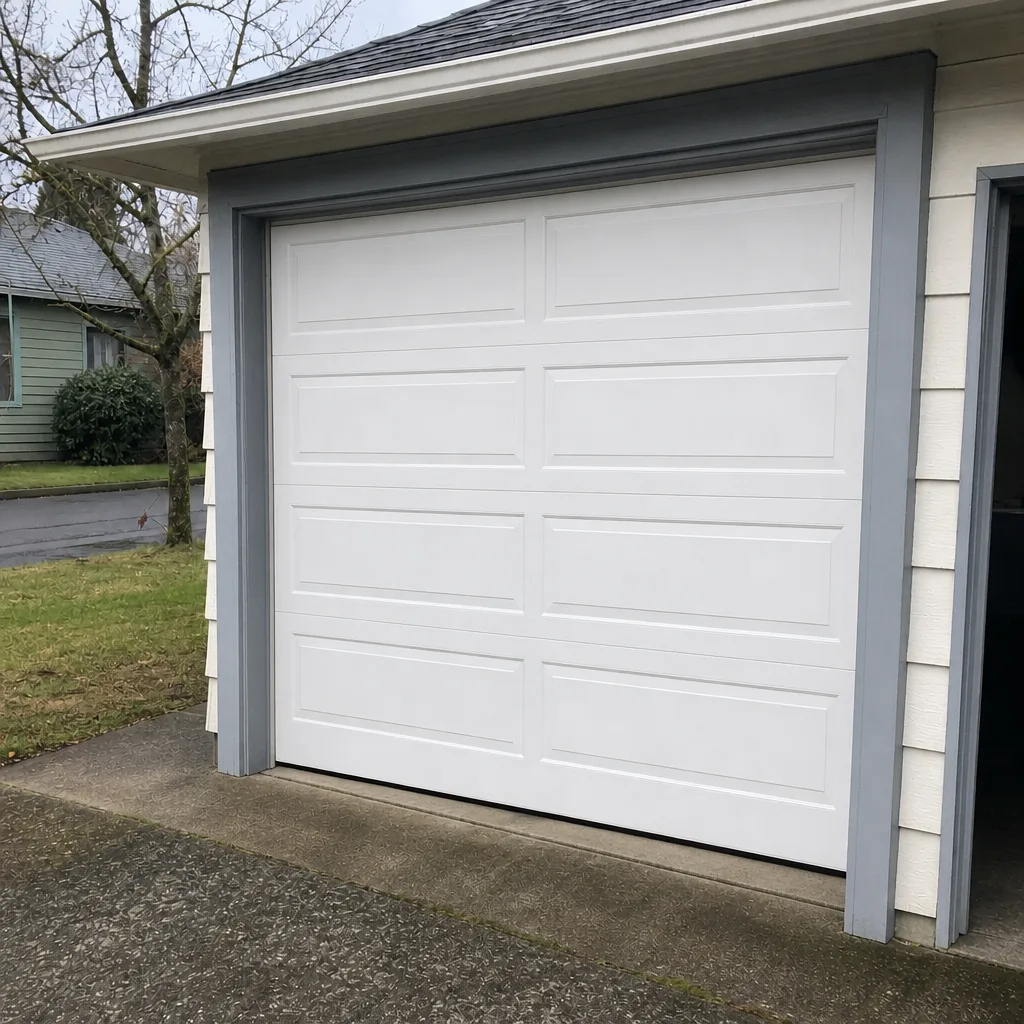 After
Frequently Asked Questions
The most common sign is a loud pop followed by a door that won’t lift, or a visible gap in the torsion spring above the door. Sometimes you’ll also see the door lift a few inches and stop, or hear the opener running without any door movement. If you see or hear any of that, don’t try to open the door manually or touch the spring – call a technician. Call (888) 534-4142 for an exact quote; estimates are free.
Yes, if the problem is alignment, dirt on the lens, or a loose wire at the mounting bracket, those are safe to handle yourself. Start by wiping the lenses, checking that both lights are solid, and confirming nothing is blocking the beam. If the sensor is dead, water-damaged, or the wire has been cut, that’s a repair call. Call (888) 534-4142 for a free estimate if you’re not sure.
It’s almost always the safety sensor reacting to an obstruction, a dirty lens, or a misalignment – the auto-reverse is doing its job. If the sensors look clean and aligned, the opener’s force settings or limit switches may have drifted, or the tracks may be binding enough that the opener reads the strain as a blockage. Never adjust or disable the sensor to fix it. Call (888) 534-4142 for a free estimate.
Typical estimates run from about $90-$180 for a sensor fix up to $180-$340 for a single torsion spring, with most common repairs falling in the $140-$320 range. A matched spring pair costs about twice the per-spring figure because both are replaced together. The written estimate sets the final price, agreed before work starts. Call (888) 534-4142 for an exact quote; estimates are free.
Yes, for most repair calls – we aim to get a technician out the same day whenever the schedule allows. Same-day service is available for sensor repairs, opener faults, track realignment, and spring and cable calls. Call (888) 534-4142 and we’ll find the soonest opening. We answer 24/7. Fast dispatch from 7am to 7pm, Sunday through Friday.
No – the price you agree to before work starts is the price you pay. If the technician finds something the phone conversation didn’t reveal, they’ll walk you through it and re-quote before touching the door. Nothing happens without your approval. Call (888) 534-4142 for a free estimate.
Common Mistakes to Avoid
- Forcing a door that’s started to bind. A stiff door is telling you a roller, track, or spring is failing. Forcing it transfers strain to the panels, and here in Hillsboro a wet-season bind that gets forced often turns into a cracked bottom panel. Stop and diagnose before you pull.
- Greasing the whole door instead of the right parts. White lithium grease on hinges, rollers, and the torsion bar is useful. Grease on the tracks attracts grit, which turns the track into sandpaper and grinds down rollers faster. Lube the moving parts, leave the tracks clean.
- Disabling or blocking the safety sensors. Bypassing the photo-eye is the leading cause of runaway doors. It doesn’t fix the problem, and it defeats a safety feature the opener is required to have.
- Replacing one torsion spring and leaving the other. Springs wear at the same rate. If one is broken, the second is nearly as tired. Replacing only one means a second call in a few weeks.
- Ignoring a slow rust line on the bearing plate. In Hillsboro’s wet winters, rust on the torsion bar bearing plates can seize the shaft. It’s a cheap part to replace and an expensive one to ignore.
- Prying on a door that’s off its track. A door that’s hung a roller out of the track is under spring tension on one side. Prying it back in without unloading the spring can snap the track or injure you. That’s a call.
- Putting off a bottom seal replacement. A cracked seal lets water sit against the door’s bottom panel and the slab, and a damp panel rots or rusts far faster than a dry one. Once you can see daylight under the door with the door closed, replace the seal.
The Bottom Line
Most garage door problems in Hillsboro fall into one of five categories, and the symptom – grinding, popping, reversing, hanging, or dead silence – tells you which one. If the repair involves a spring, a cable, or a loaded track, call a technician; if it’s sensors, remotes, or lubrication, you can likely handle it yourself. Catch the wet-season issues early and you’ll spend far less than you would after a panel or a track fails. When you’re not sure which category you’re in, describe what you see and hear on the phone and we’ll narrow it down. Estimates are free, and the price is quoted and agreed before any work starts.
Call (888) 534-4142 for a free estimate. We answer 24/7. Fast dispatch from 7am to 7pm, Sunday through Friday.
Written by the team at Blackwell Garage Door Repair.