
Last updated November 15, 2026
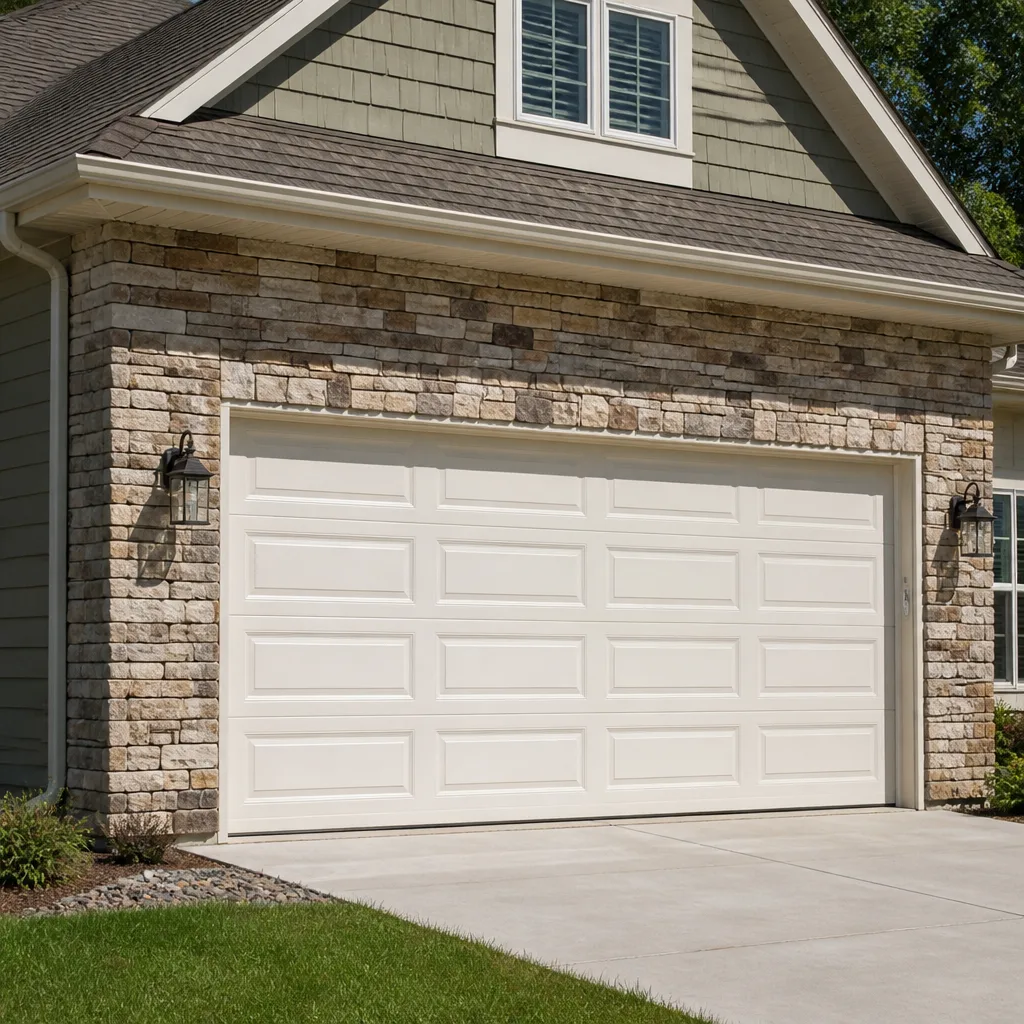 Raised-panel steel
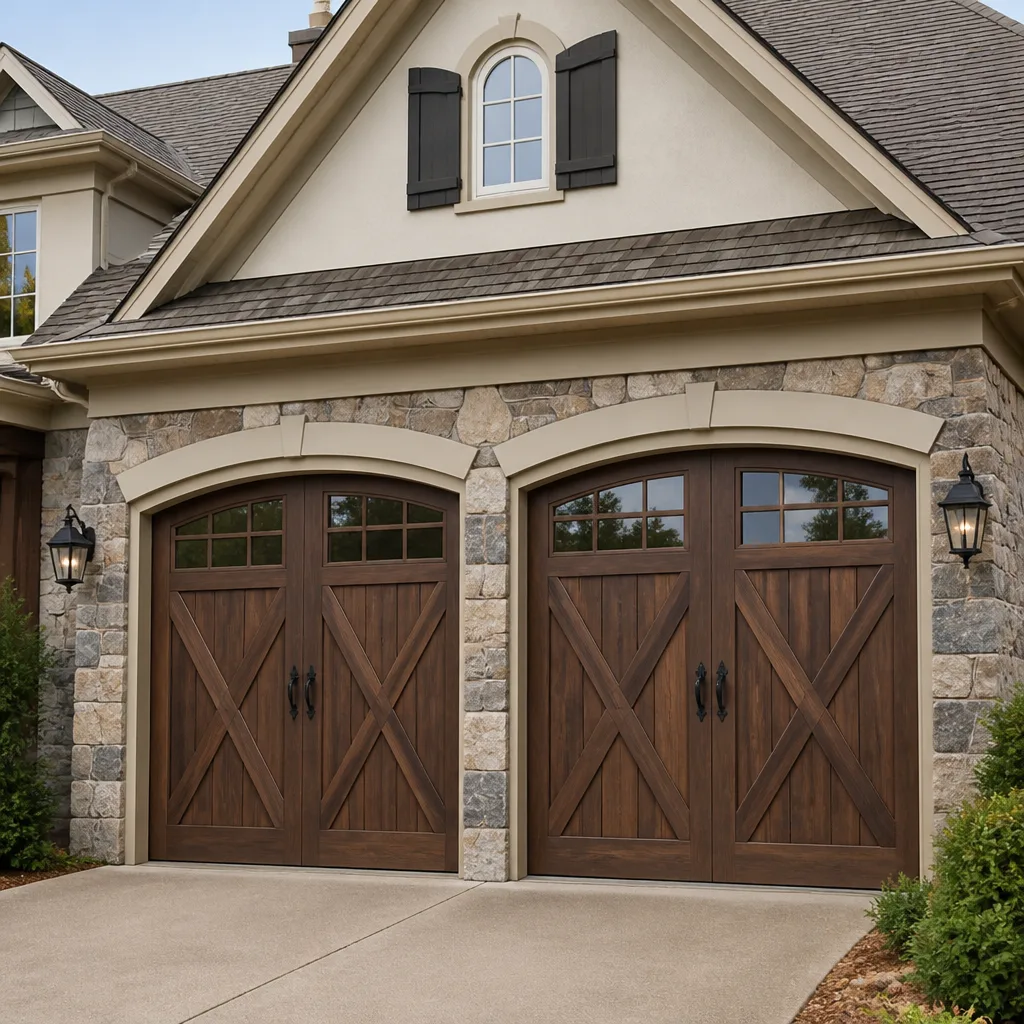 Carriage house
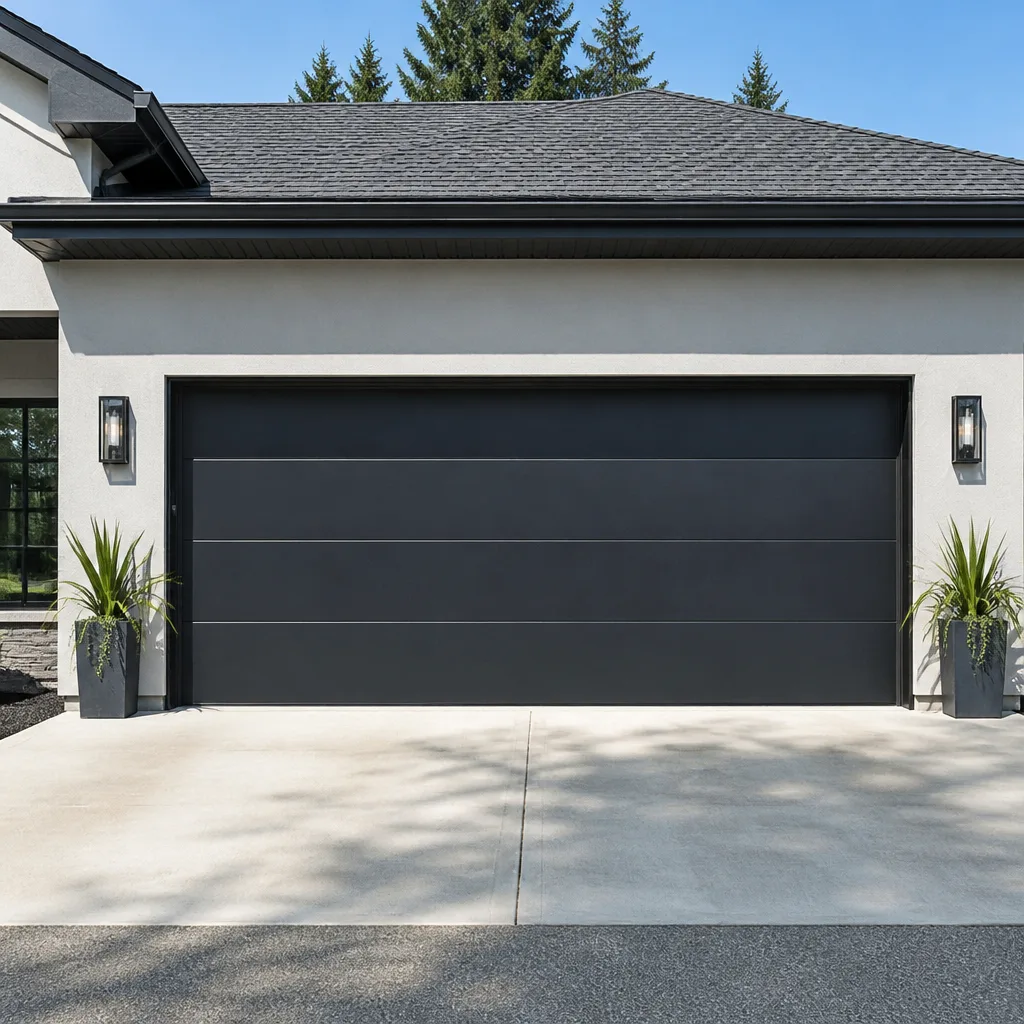 Modern flush
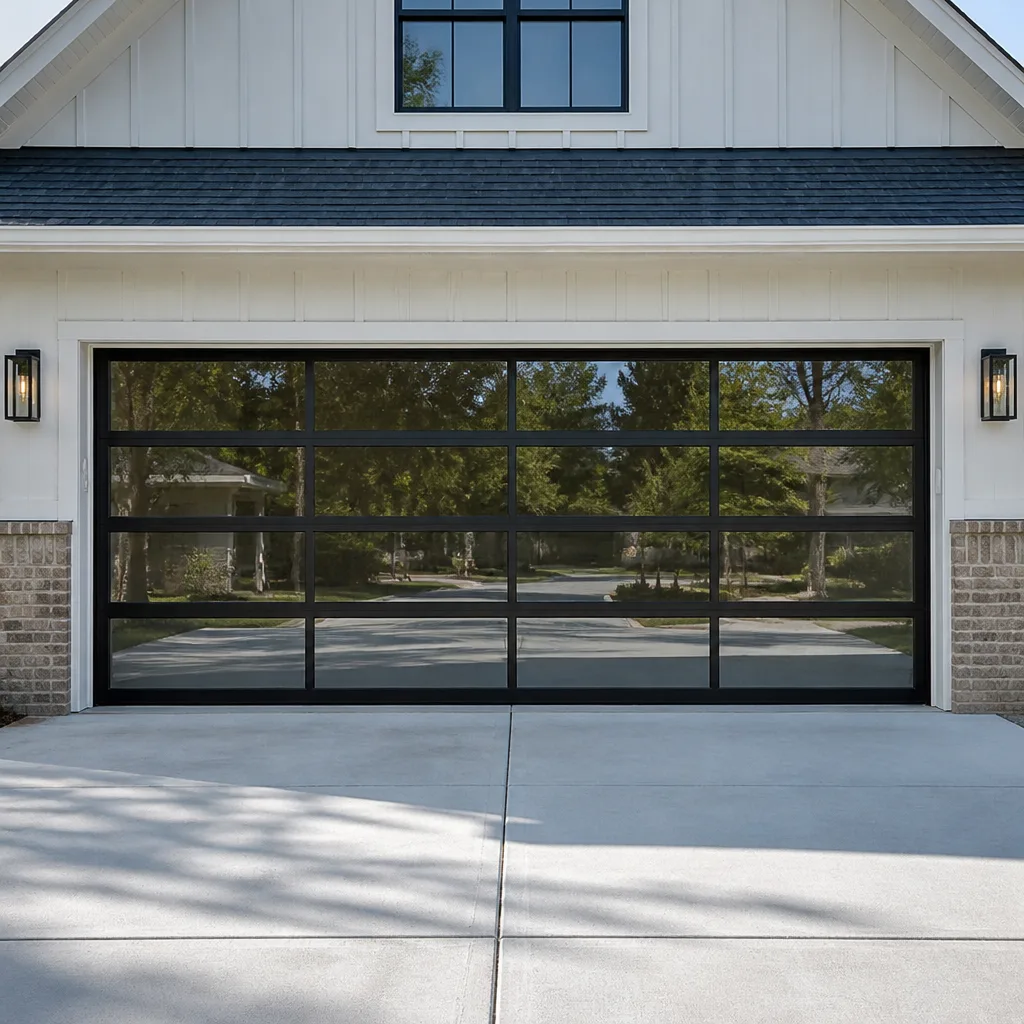 Full-view glass
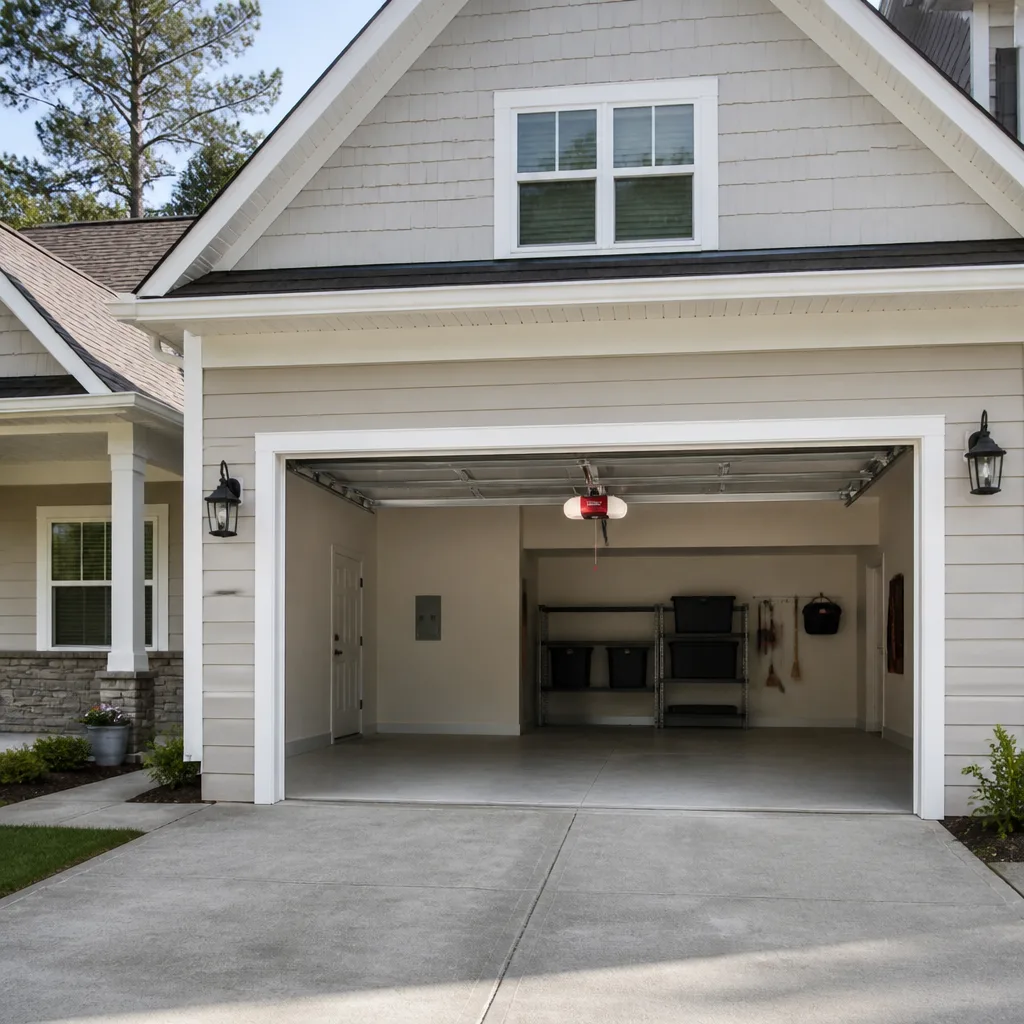 LiftMaster openers
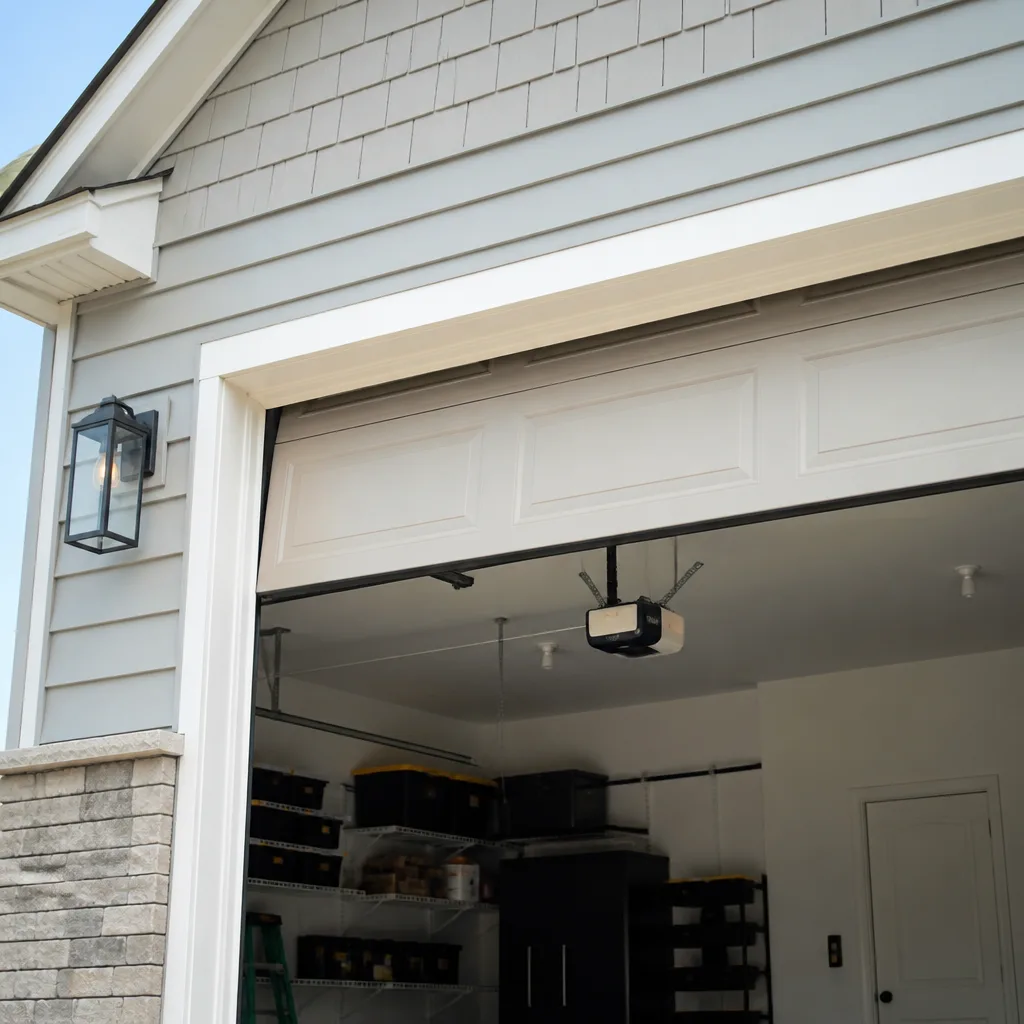 Chamberlain openers
Full 25-point door and opener safety check with every visit - springs, cables, rollers, tracks, and your LiftMaster or Chamberlain opener included
You get a price before we start. It does not change when the pro arrives.
Get your free estimateGarage Door Emergency Preparedness Guide for Hillsboro Homes
Most garage door emergencies don’t happen at a convenient time. They happen on a weekday morning, coffee in one hand, keys in the other, when the door goes halfway up and stops with a jolt that sounds like a gunshot. That’s the moment homeowners discover they don’t know where the manual release cord is, whether the door is too heavy to lift with a broken spring, or whether the number they saved does same-day work. This guide covers what to do in that exact moment in Hillsboro, plus the fifteen-minute prep that makes the next one a nuisance instead of a crisis.
Quick Answer
If your garage door won’t open and a car is trapped, don’t force it. Pull the manual release cord only if the door is fully closed and you’re certain no spring is broken; a door with a broken spring can weigh well over a hundred pounds and will drop. Call a garage door specialist, not a general handyman, and get a written price before any work begins. Blackwell Garage Door Repair answers 24/7 at (888) 534-4142, with fast dispatch from 7am to 7pm, Sunday through Friday.
Styles & brands we work with
- Raised-panel steel
- Carriage house
- Modern flush
- Full-view glass
- LiftMaster openers
- Chamberlain openers
Table of Contents
- Why Garage Door Failures Cluster Around Weekday Mornings
- How to Use the Manual Release on Common Openers
- The Broken Spring Weight Problem Most Guides Skip
- How to Prop a Door Open Safely to Free a Vehicle
- What to Tell a Dispatcher to Get an Accurate ETA
- Two Scenarios Where You Should Never Manually Operate the Door
- The 15-Minute Pre-Emergency Exercise for Hillsboro Homes
- How Hillsboro Weather and Housing Shape Door Failures
Why Garage Door Failures Cluster Around Weekday Mornings
Garage doors fail mostly on weekday mornings. That isn’t superstition; it’s mechanics and timing working against you. A door that has been sitting closed since the night before is at its coldest and stiffest when you first hit the button. Springs, rollers, and opener gears are all under their first load of the day. If something has been wearing for weeks, the first cycle of the morning is often the one that finishes it off.
There’s a second reason, and it’s about how Hillsboro homes actually get used. Most households run two vehicles through one door multiple times before 9am. School drop-offs, commutes toward Highway 26, a quick trip to the store on a work-from-home day. That’s more cycles in two hours than the door sees in an entire weekend. The door doesn’t fail because you’re unlucky. It fails because weekday mornings are when it does the most work.
What that means practically: the failure almost always happens when you’re on a schedule. Which is exactly when people make bad decisions. They yank the manual release. They try to lift a door they can’t hold. They call whoever answers fastest and get routed to a subcontractor with no relationship to the problem.
The homeowners who handle it well made two decisions in advance. First, they know their manual release protocol: where the cord is, how it works on their specific opener, and when not to touch it. Second, they know who to call, and it’s a specialist who does same-day work on the brand they own. Everything else in this guide flows from those two decisions.
- Coldest, stiffest cycle of the day is the first one.
- Peak cycle count lands in a two-hour window.
- Schedule pressure produces rushed, unsafe decisions.
- Two advance decisions prevent almost every bad outcome.
How to Use the Manual Release on Common Openers
Every residential opener has a manual release, and the basic idea is the same across brands, but the details differ enough that you should know your specific unit before you need it. On most garage door opener repair calls we make in Hillsboro, the homeowner has never located the release cord until the door was already stuck. That’s the wrong order.
What the manual release actually does
The release disconnects the door from the opener’s drive system so you can move the door by hand. It does not disconnect the springs. This is the part people miss. The springs are what balance the door’s weight. The opener just pushes and pulls a balanced door. When you pull the release, you’re taking the opener out of the equation, not the springs.
General sequence for most residential openers
- Make sure the door is fully closed and the opener is stopped. Never pull the release with the door partway up.
- Locate the release cord or handle. On most LiftMaster and Chamberlain units it hangs from the trolley on the rail; on many Genie models it’s a similar pull cord near the carriage.
- Stand clear of the door’s path and to the side, not directly under it.
- Pull the cord firmly at a slight angle toward the door, not straight down. You should feel the trolley release.
- Test the door’s weight by lifting it a few inches with one hand. If it feels heavy, stop and put it back down.
If the door lifts with light, even effort, the springs are doing their job and you can raise it by hand. If it feels like lifting a car hood with an engine still in it, the springs are compromised. Close it and call.
Safety note: Torsion springs store tremendous energy, and extension springs can fail violently. Never try to adjust, unwind, or replace a spring yourself, and never stand under a door that’s being held open by a spring you don’t trust. Spring work is a trained-professional job, full stop.
The Broken Spring Weight Problem Most Guides Skip
Here’s the thing most emergency guides leave out: when a spring breaks, the door stops being a door and becomes a very heavy panel hanging from a track. A standard single-car door weighs somewhere in the range of 130 to 200 pounds. A double-car door runs heavier still. The springs normally carry most of that, which is why a healthy door feels like it weighs twenty pounds.
With a broken spring, you’re lifting the full weight by hand. If you have a two-car door and you’re lifting from one side, you’re lifting an unbalanced load that wants to twist in the track. That’s how people get hurt and how doors get bent beyond a simple repair. We’ve seen Hillsboro homeowners turn a broken spring into a bent track, a cracked panel, and a much larger bill because they tried to force a door up to get to work.
The signs of a broken spring are usually obvious once you know them:
- A loud bang from the garage, often described as sounding like a firecracker or a gunshot.
- The door opens a few inches and stops, or won’t move at all.
- A visible gap in a torsion spring above the door, or a stretched-out extension spring alongside the track.
- The door feels extremely heavy when you try to lift it by hand.
- The opener runs but the door doesn’t move, or the opener strains and shuts off.
If you see or feel any of these, the door is not safe to operate by hand or by opener. Leave it closed if you can, and call for repair. A trained technician can assess whether the door uses torsion or extension springs, match the right replacement, and get it balanced again. Springs are matched to door weight and height, so the wrong one causes repeat failures.
How to Prop a Door Open Safely to Free a Vehicle
Sometimes the car is inside and it needs to come out. Maybe there’s a medical appointment. Maybe a kid needs to get to school. Maybe you just need to get to work. If the door will lift with reasonable effort and the springs appear intact, you can sometimes raise it by hand and secure it. If the springs are broken, see the section above and don’t try.
When the door is functional but the opener has failed, here’s the general approach:
- Disconnect the opener using the manual release (see the previous section).
- Lift the door evenly with both hands, using the lift handles or the bottom section’s frame, not the panels themselves.
- Raise it fully open and check that it’s resting at the top of the track as intended.
- If the door won’t stay up on its own, prop it with a sturdy object rated for the weight. A proper door prop or a heavy-duty adjustable support designed for the purpose is the safe choice.
- Never use a chair, a bucket, a cinder block balanced on end, or a broom handle. Those fail without warning.
- Move the vehicle out slowly, and don’t walk under the door while it’s propped.
- Lower the door carefully by hand and close it fully before you leave.
The safest approach with a propped door is to keep the time short and the traffic minimal. Get the car out, close the door, and book the repair. A propped door is a temporary workaround, not a solution, and it isn’t secure overnight.
If the door has to stay closed because it can’t be lifted safely, that’s a different problem. See the next section on what to tell a dispatcher to get an accurate ETA, because the priority shifts from “get the car out” to “get somebody out today.”
What to Tell a Dispatcher to Get an Accurate ETA
The first call after a garage door failure is often the one that decides how the rest of the day goes. Getting routed to a national call center that then subcontracts to whoever’s available in the area means you’re at the mercy of a middleman who has never seen your door. A specialist who works Hillsboro directly can give you a real answer.
Whether you’re calling us or anyone else, here’s what to have ready. These details let a dispatcher assess the job, decide what parts to bring, and give you a realistic window:
- Door type and size. Single-car or double-car, sectional or one-piece, and roughly how old it is if you know.
- Opener brand and model. LiftMaster, Chamberlain, Genie, Clopay, and the others all have their own parts. If you don’t know the model, check for a label on the back of the motor housing.
- Symptom in specific terms. “Door opens six inches and stops” tells us more than “it’s broken.” “Loud bang and now the door won’t move” points straight at a spring.
- Whether the door is currently open, closed, or stuck partway. This affects safety and urgency.
- Whether a vehicle is trapped. If someone needs to get to work or to an appointment, that changes the priority.
- Your address and any access notes. Gate codes, steep driveways, dogs in the yard, anything that adds time.
A dispatcher who asks these questions is a dispatcher who can actually give you an accurate ETA. If you get a vague “sometime today” with no follow-up questions, that’s a sign you’re talking to a call center that will dispatch whoever’s closest. It’s worth asking directly: is this company sending its own technicians, or is it subcontracting? We’re upfront about how we work: we’re a specialist Blackwell Garage Door Repair team focused on garage doors, and every technician we send is a garage door specialist, not a generalist with a door job on the side.
Two Scenarios Where You Should Never Manually Operate the Door
Manual release is a useful tool in the right circumstances. There are two situations where it’s genuinely dangerous, and we’d rather you leave the door alone than take the risk.
1. A broken spring or a door that feels heavy
We covered this in detail above, but it deserves its own line here. If you suspect a spring has broken, or the door feels unusually heavy when you start to lift it, stop immediately. The door can fall, twist in the track, or come off its hinges. The spring itself is under extreme tension and shouldn’t be touched. Leave the door closed and call for repair.
2. A door that’s already off its track or visibly damaged
If the door is hanging crooked, one side is off the track, a panel is bent, or the track itself is visibly bent, any attempt to operate it will make things worse. A door that comes down out of its track can injure someone standing nearby and can damage the vehicle underneath. Don’t try to realign it yourself. Don’t push it up or pull it down. Call a professional, and keep people and vehicles clear of the area.
Both of these scenarios are calls we get in Hillsboro regularly, and both need a trained technician. The good news is that a same-day repair is often possible, and the fix is usually straightforward once someone who knows the system is on-site.
The 15-Minute Pre-Emergency Exercise for Hillsboro Homes
This is the exercise that makes the next emergency a nuisance instead of a crisis. Do it once, write down what you find, and keep it somewhere you’ll remember. Fifteen minutes now saves hours later.
Step 1: Locate and test the manual release (5 minutes)
Stand under the opener rail and find the release cord. Pull it gently, feel the trolley disengage, and then reset it by running the opener once (or re-engaging per your manual). You want to know exactly where the cord hangs and how much resistance it has. If your release cord is missing, broken, or tied up with tape, that’s a repair to get done now, not later.
Step 2: Test the door’s balance by hand (3 minutes)
With the door closed and the opener disconnected, lift the door about a foot and let go. If it stays put or drifts slightly, the springs are balanced. If it slams down, or feels much heavier than you remember, the springs are wearing and should be looked at before they fail. Don’t try to adjust anything. Just note what you feel.
Step 3: Test the safety features (3 minutes)
Two features matter on every modern opener. First, the photo-eye sensors at the bottom of the tracks: pass your hand or an object through the beam and see if the door reverses. Second, the auto-reverse pressure setting: place a roll of paper towels or a piece of wood flat on the floor under the door and close it. The door should stop and reverse. If either test fails, the opener needs service.
Step 4: Document your system (4 minutes)
Take a photo of the opener label showing the brand and model. Note the door’s size (single or double), its material (steel, wood, aluminum), and roughly when it was installed if you know. Note any prior repairs and what was replaced. Save this somewhere you can find it in a hurry. When you call for emergency service, you’ll have everything a dispatcher needs in one place, no scrambling.
That’s it. Fifteen minutes. The homeowners who’ve done this are the ones who handle a failure calmly, because they already know their door’s condition and have the right contact saved.
How Hillsboro Weather and Housing Shape Door Failures
Not every garage door emergency is about springs. Hillsboro’s climate and housing stock each add their own failure patterns, and they’re worth knowing about because they show up as “why is my door doing that” rather than a dramatic break.
The wet season matters. Hillsboro gets substantial rain from late fall through spring, and that moisture finds its way into garage door hardware. Steel panels can rust along the bottom edge where water pools. Rollers and hinges can get gummy. Wood doors can swell. A door that worked fine in October can start groaning in January because the rollers are dragging and the springs are working harder than they should.
The summer dry-out brings its own issues. Wood parts dry out and panels can settle. Tracks shift slightly. Openers that got used hard through the winter occasionally overheat or fail. And the temperature swings between a cold night and a warm morning cause metal to expand and contract, which is one reason those first morning cycles can be the ones that break something.
Housing stock plays a role too. Many Hillsboro homes were built between the 1970s and the 2000s, and the original openers and doors in those homes are now well into their service lives. A LiftMaster or Genie opener from that era can be perfectly serviceable, but it can also fail suddenly if its capacitors or drive gears are original. Older doors often carry the original springs, which have a predictable lifespan but don’t announce when they’re about to go.
The practical takeaway: check your door’s operation every season, and don’t assume a mid-1990s opener will keep working forever without an occasional look from someone who knows the model. If you’re not sure what brand you have or when it was last serviced, a routine assessment is cheap. Replacing a failed system at emergency speed is not.
Common Mistakes to Avoid
- Pulling the manual release on a door with a broken spring. This is the single most common way people get hurt. The release doesn’t remove the weight, only the opener’s help. If the door feels heavy, close it and call.
- Calling a general handyman for a spring or opener problem. Garage doors are a specific trade with specific parts. A handyman who “does doors on the side” may not know the difference between a torsion and an extension spring on your specific unit. We work on what you have, across the major brands, because garage doors are all we do.
- Forcing the door past a physical obstruction. A bent track, a snapped cable, or debris in the track won’t give. Forcing the door bends panels, cracks hinges, and can pull the door out of the track. Stop and get it looked at.
- Using the wrong prop for an open door. Chairs, buckets, and cinder blocks balanced on end all fail. If the door won’t hold itself open, use a proper support rated for the weight, or wait for a repair.
- Ignoring the safety sensor test. Photo-eye sensors are what keep a door from closing on a child or a pet. A sensor that’s been nudged out of alignment or covered in dust fails silently. Test it monthly.
- Not documenting the opener brand and model. When the door fails, you’ll be on the phone trying to read a label by flashlight. Save the photo now and you’ll have everything the dispatcher needs.
- Calling a national call center that subcontracts. You want a real ETA from a company that works in Hillsboro. If the dispatcher doesn’t ask about your door type, opener brand, or current position, keep looking.
See the difference
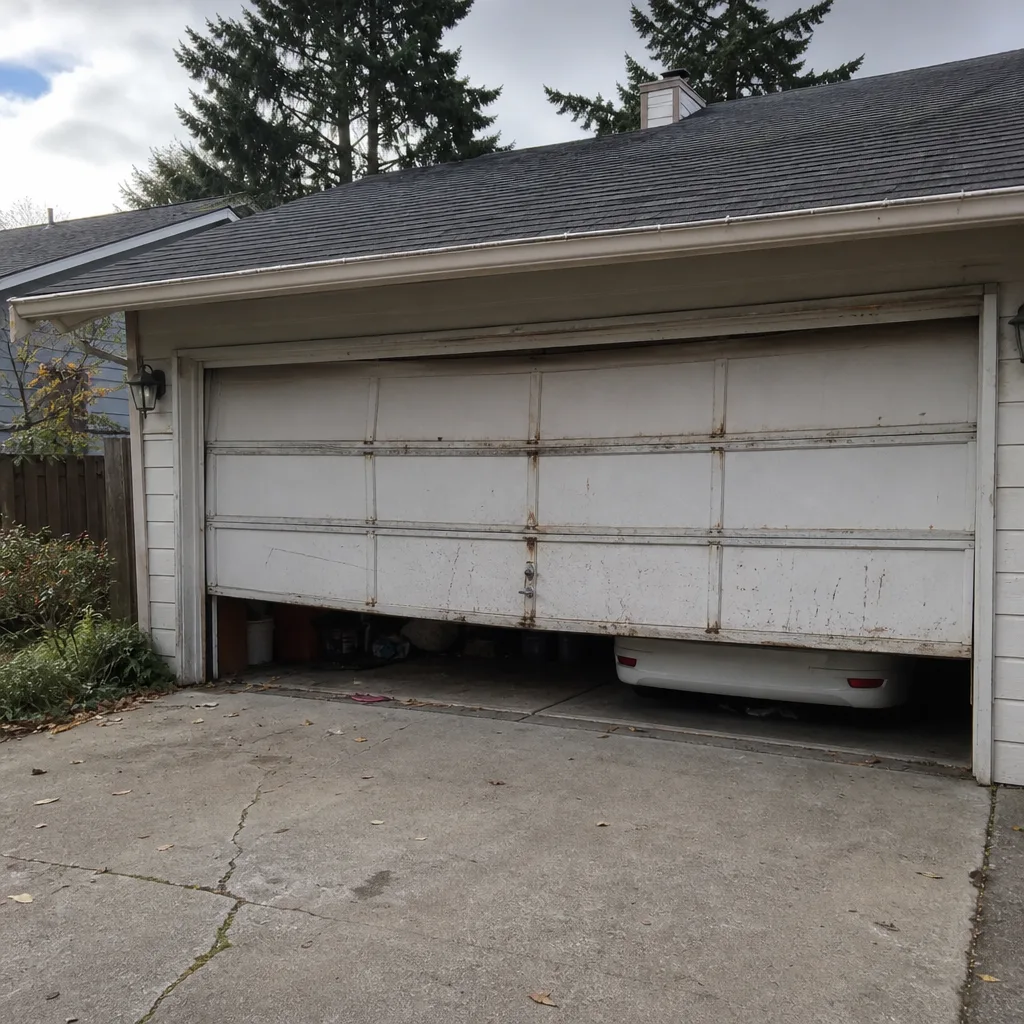 Before
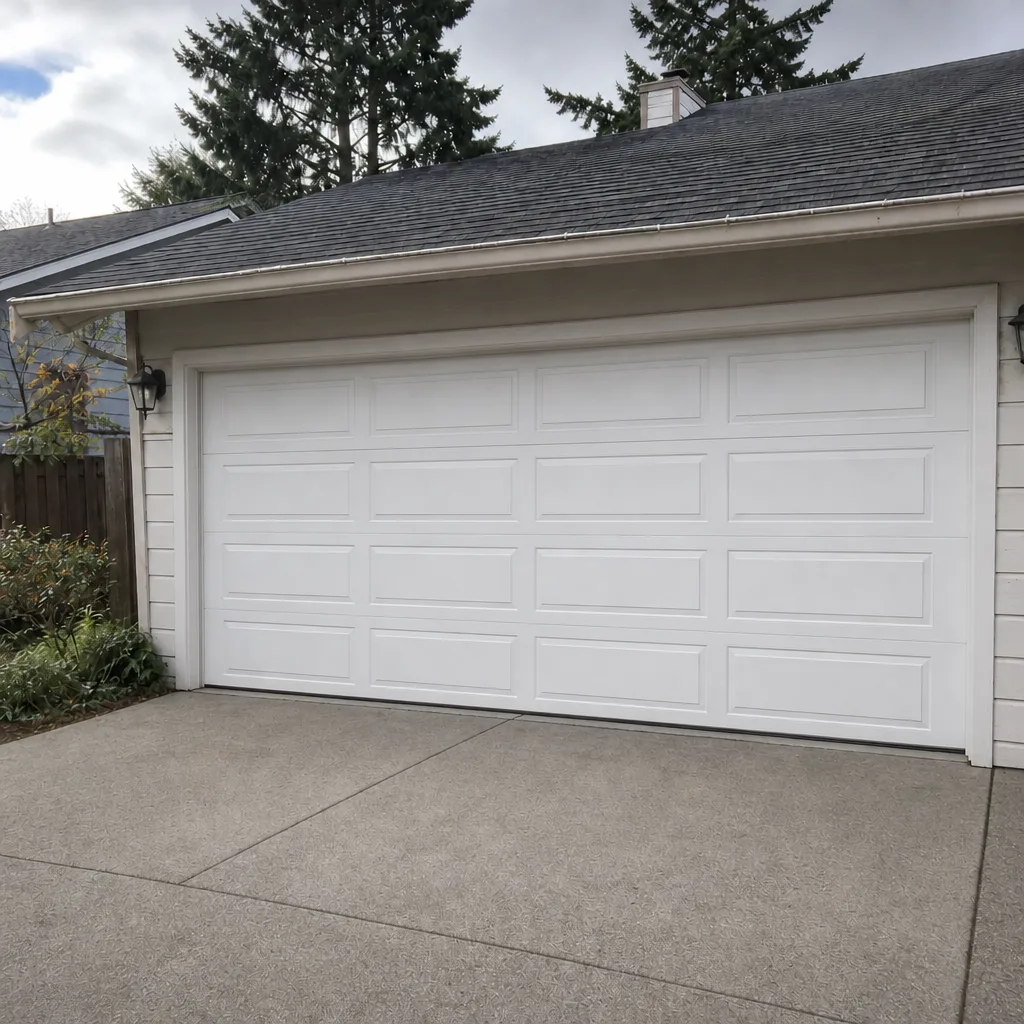 After
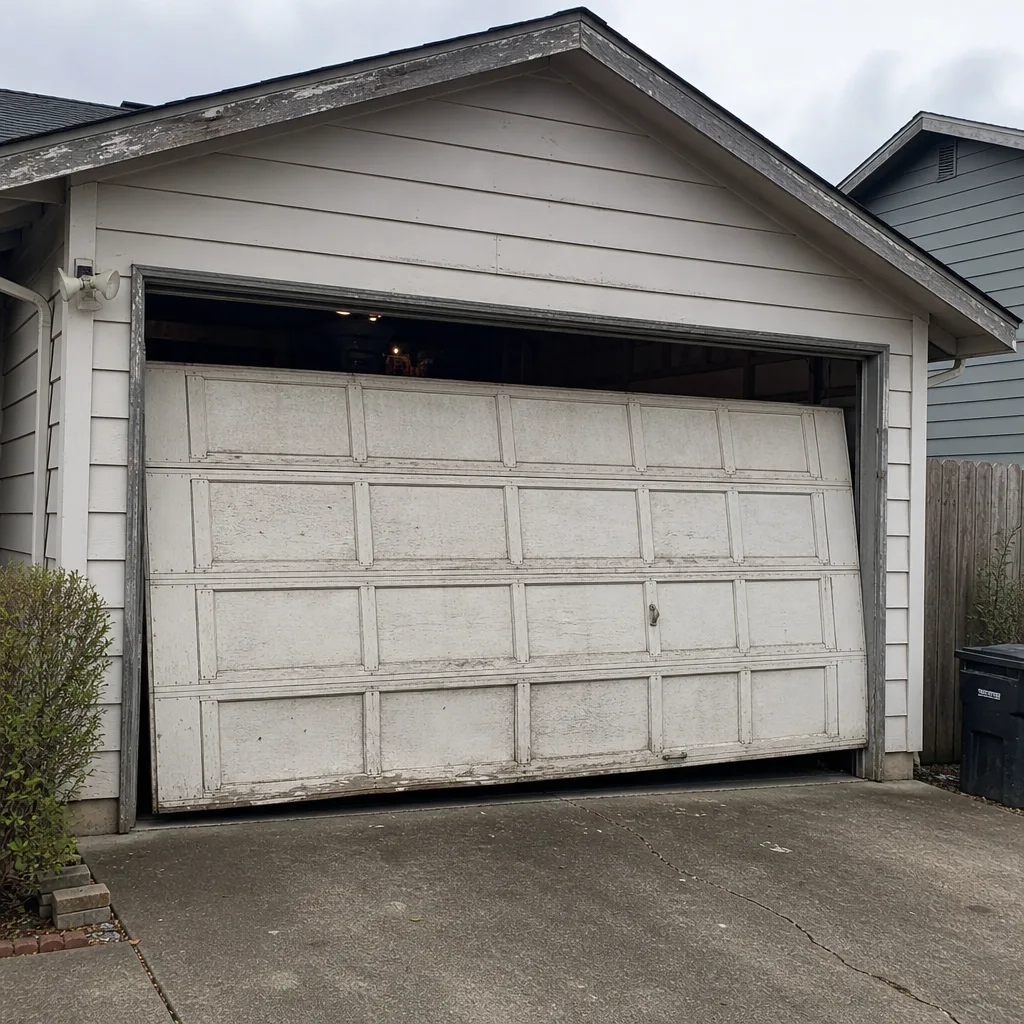 Before
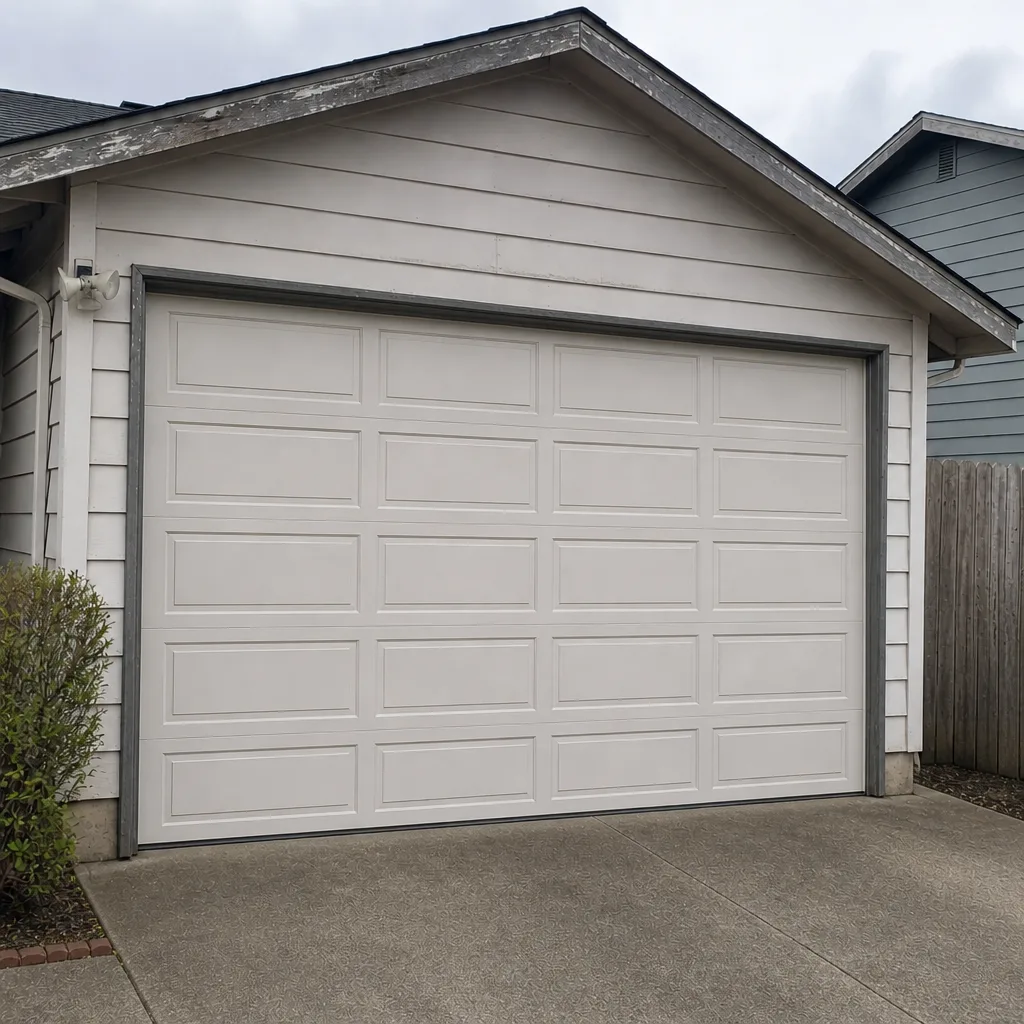 After
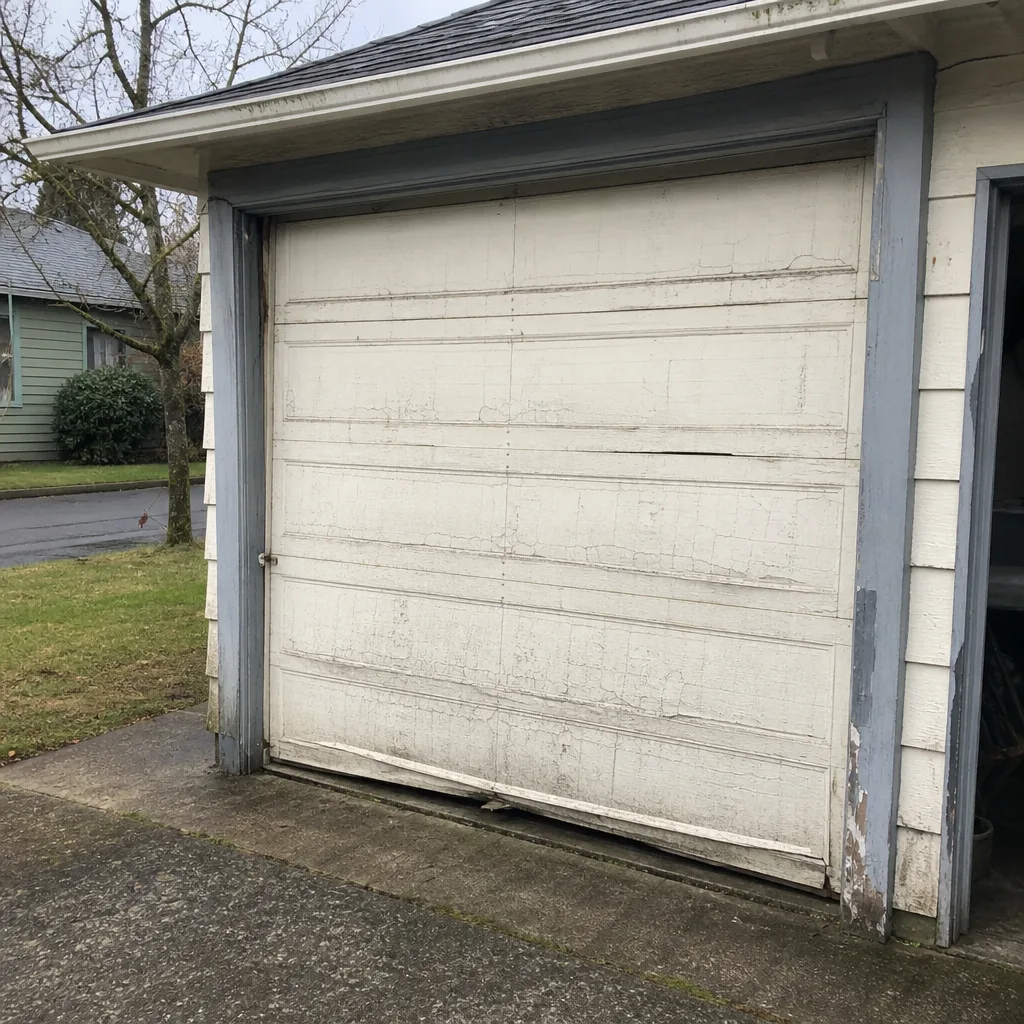 Before
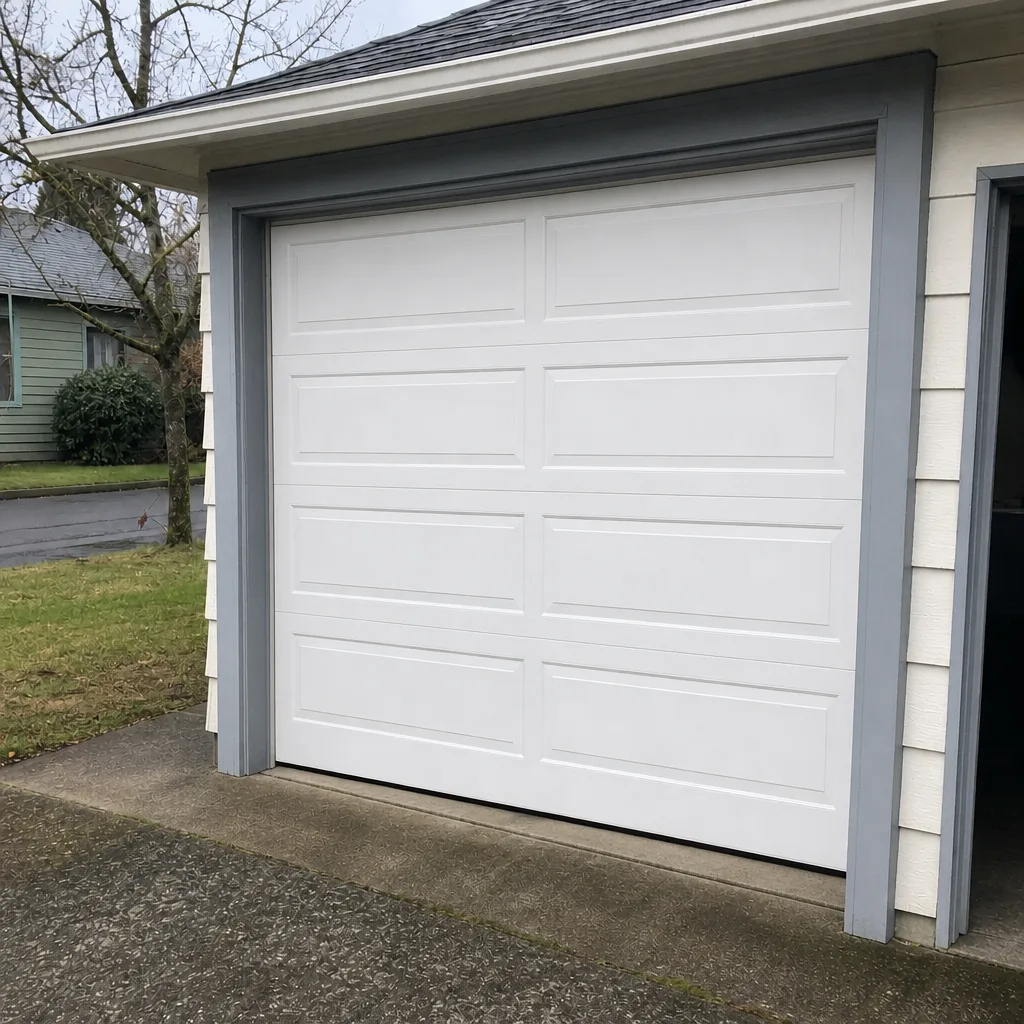 After
When to Call a Professional
Some garage door issues are cosmetic. Some are anything but. Call a professional when: a spring has visibly broken or the door has become heavy to lift; the door is off its track, crooked, or hanging by one side; the opener runs but the door doesn’t move, or the opener trips a breaker; the safety sensors fail their reverse test; you hear a loud bang from the garage followed by a door that won’t open; or a cable is visibly frayed or dangling. Springs and torsion cables in particular store enough energy to injure seriously, and they’re not a homeowner repair.
Blackwell Garage Door Repair offers free estimates in Hillsboro. We work on the major door and opener brands, we diagnose the system you own rather than steering you toward a preferred brand, and we quote a written price before any work starts. Call (888) 534-4142 to book, and have your door type and opener brand ready. Same-day service is often available.
Frequently Asked Questions
Don’t force it. If the door is fully closed and you’re confident no spring is broken, try the manual release and lift the door by hand. If it feels heavy, stop, close it, and call for repair. If you need the car out and the springs are intact, lift the door evenly and use a proper support rated for the weight to hold it open while you move the vehicle. Call (888) 534-4142 for an exact quote on the repair; estimates are free.
A broken spring almost always makes a loud bang and leaves the door too heavy to lift by hand. An opener failure usually means the door is still light to lift but the motor won’t move it, or the opener runs without moving the door. If you’re not sure, test by lifting the door a few inches by hand with the opener disconnected. Heavy means spring. Light but stuck means opener. Either way, call for service.
Often, yes. Spring repairs, opener repairs, and most hardware issues can be done in a single visit if the parts are on hand and the diagnosis is straightforward. What affects timing is whether the door or opener brand is one the technician carries parts for, and whether the door is in a condition that allows the repair on the first visit. Have your brand and model handy when you call, and you’ll get a much more accurate window.
The written estimate is the price. We quote before any work starts, and if we find something that changes the scope (a bent track behind a broken spring, for example), we’ll tell you what’s needed and what it costs before we touch anything. You’re not committed until you agree to the quote. If the price changes, that’s a conversation, not an invoice.
Yes. Our technicians are state-licensed and insured, and our technicians have up to 9 years of experience. Every technician we send is a garage door specialist, not a generalist, because garage doors are the only work we do. Ask to see credentials when a technician arrives; a real specialist won’t be bothered by it.
No. Torsion springs are under extreme tension and can cause serious injury if they release unexpectedly. Extension springs can fail with enough force to break through drywall. Spring repair requires specific tools, a controlled release process, and the right replacement spring for your door’s weight and height. This is the one job in garage door maintenance that you should never take on yourself.
For every repair question, call (888) 534-4142. Estimates are free and we’ll tell you straight whether you’re looking at a repair or a replacement.
The Bottom Line
A garage door emergency is really a decision problem disguised as a mechanical one. If you know where your manual release is, whether your door lifts light or heavy, and who to call, you’re already ahead of most Hillsboro homeowners. The two safety rules matter most: never pull the release on a door with a broken spring, and never try to operate a door that’s off its track. Do the fifteen-minute prep while the door is still working, save your opener’s brand and model, and keep a specialist’s number on hand. When the door fails, you’ll move through it calmly instead of scrambling. Blackwell Garage Door Repair is here for the full lifecycle: new garage door repair work, opener service, and installation. Call (888) 534-4142. We answer 24/7, and fast dispatch from 7am to 7pm, Sunday through Friday.
Written by the team at Blackwell Garage Door Repair.